
More than 655,000 Americans have died in battle, and they all have stories to tell
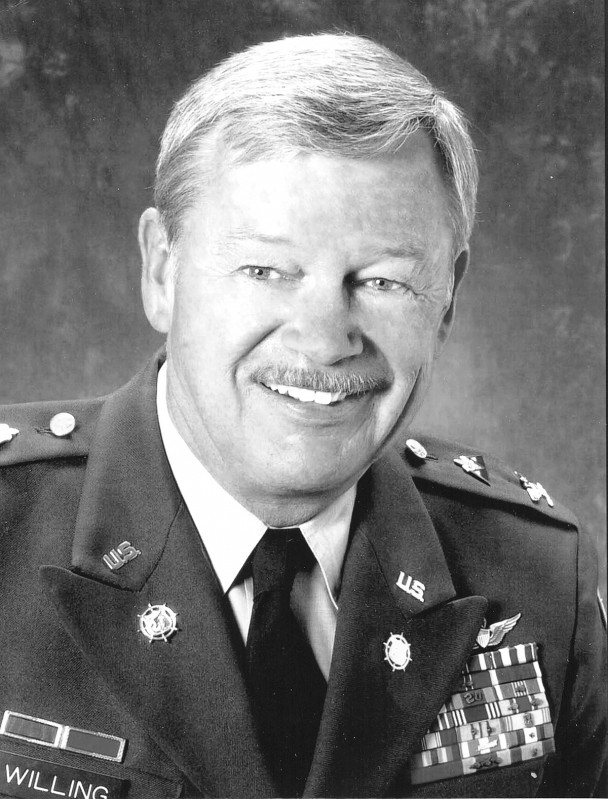
Editor’s note: The following speech was delivered by retired Col. Bill Willing at Anaconda’s Memorial Day program on Monday, May 26 at the Washoe Theatre. It is being reprinted with permission in this lightly edited format.
Since America united as one nation, this great country has surrendered its bravest to liberate the oppressed and ensure freedom for its citizens and future generations. Battle lines were drawn and blood was spilled on U.S. soil and foreign lands. The sacrifices made in America’s wars, from the American Revolution to the ongoing conflicts throughout the world, now total more than 655,000 American service members who have died in battle. They each have stories to tell. The crosses at Normandy. The markers at the Punchbowl. The tombs at Arlington.
The fallen heroes who rest in places unknown but to God.
On Memorial Day, we commemorate and celebrate with humble reverence, the memory of 655,000 absent comrades, all of whom epitomize and give true meaning to the words, “valor, sacrifice, and honor.” We set a side this day to publicly honor the best and noblest of us all. Memorial Day is the day without which we would not have any of our other days as a nation.
There would be no Independence Day without Memorial Day, for we would not be free. There would be no Flag Day without the sacrifices of those we honor today. There would not be Christmas, for we would not have our freedom of religious choice. Memorial Day is the keystone for all the other days we so reverently celebrate. Those we honor today have made all our days and freedoms possible.
Memorial Day is a time of conflicting emotions for each of us; a blend of pride and mournfulness, gratitude and loss, and a deep abiding sense of patriotism. The sacrifice of your own family members is a heavy price to pay, but it is the cost of freedom.
In my family we have paid this heavy price through many wars. We have lost 20-year-old Ensign Archie Baker, Naval Aviator, Joliet, Montana shot down in aerial combat over the Pacific during World War II – his body never recovered. All we have is his baby ring.
Our family has paid with 19-year-old Arthur Siegle, Fairfield, Montana, Private, 680th Ord. Co., US Army, died as a result of the Bataan Death March. All we have remaining is the telegram received by his mother after the end of World War II notifying her that her son was dead. His body never recovered.
We’ve paid with 19-year-old Edward Willing, Wilmington, Delaware, Lance Corporal, United States Marine Corps; he was last seen wounded and being captured in Quang Nam Province, Vietnam. His body was never recovered. Fifty years later all that remains is his name carved on the Vietnam Memorial Wall.
The 655,000 combat casualties we read about in American history books are individuals cut down often in the prime of their unfulfilled lives. These numbers are someone’s family.
Someone’s son, daughter, brother, sister, aunt, uncle, cousin, father or even a mother. Most of the service members who died were so young they had never tasted life. They never experienced the tender romance of a first love, nor the joy of holding their first born, nor attending their child’s graduation or wedding. Nor any other milestone in life that most of us have experienced in our long lives and take for granted. If these noble individuals had lived perhaps they would have been one of your in laws, an aunt or an uncle, or even a spouse.
Perhaps the coach of your child’s sports team, a teacher or principal in your community, or the doctor who found the cure for cancer. These people would have made an impact on our lives if they had lived. They were someone who would have added value to our country and our society. We will never know what we have lost as a nation because of the unfilled potential of those we honor today. The grieving families know what they have lost – they have lost one of their own.
As a nation we must ensure the legacy of all service members, who have paid the ultimate price. Look over your shoulder when you enter the voting booth and remember those who ensured our country’s freedom. Look over your shoulder when you practice your religious beliefs and say a prayer for those deceased service members who ensured your religious freedom. Also say a prayer of thanks to the family who gave them up. It is up to us to make sure the legacy of our nation’s fallen is passed on from this generation to the next and then on to all generations beyond. We must ensure that the youth of tomorrow have an awareness and understanding of whom it is they should honor and exactly why they should honor them.
And how many individual’s lives it has taken to ensure their liberty.
Most of our nation’s surviving veterans today are personally aware of the cost of freedom. The cost of freedom is symbolized in the most visited war memorial in our nation: The Vietnam War Memorial in Washington, D.C. The names of more than 58,300 fallen service members, engraved on the polished black marble wall, invite onlookers to witness the true cost of war and freedom. The wall brings together in one spot the names of those who made the ultimate sacrifice in just one war. The memorial has become a place at which to honor the dead and missing from the Vietnam War.
The memorial has become a place of pilgrimage – a place where family, friends, comrades and grateful countrymen come to remember and honor the dead and missing whose names are engraved on the black granite panels. Mothers and fathers come reaching out to reaffirm their love for a lost son or daughter. Children and the old come as well, some too young to remember, some too old to forget. And then there are the vets themselves, who come quietly weeping, reconciling years of pent-up grief and renewing old friendships with lost colleagues to remember and mourn. They come to talk to their brothers-in-arms and to ask why was it them and not me. When I stand before the memorial and run my hands over the 57 names of my aviation unit’s air crew members who died, I am humbled. I don’t weep, I cry and feel ashamed because I am on this side of the wall reserved for the living staring at the names of the dead or missing and picturing their young faces and seeing the reflection of my aged and worn faces. I feel survivor’s guilt and ask “have I lived a good enough life and in a manner which would have honored them.” The Wall has become a healing wall for not only the surviving veterans but for our entire nation. The memorial has become the conscience of our nation, so that we do not forget the true cost of war and to reinforce the fact that no one would want peace more than those we honor today.
Today most Americans know just the statistics of the war as reflected in history books with numbers of killed. Memorial Day is to remember that these were real human beings just like you and I, and they didn’t want to die – for they had long lives ahead of them with yet great deeds to be accomplished.
To those who have survived war, and to the families of those who did not, we see the faces, we feel the pain that these numbers created. We can best honor their sacrifice by remembering their families, who have lost so much. Long after the guns have been silenced and the bombs stop exploding, the children of our fallen warriors will still be missing a parent. Spouses will be without their life partners. Parents will continue to grieve for their heroic sons and daughters that died way too young. Perhaps if all the names of the 655,000 individuals we honor today were carved on a single wall the real cost of our freedom would finally be understood.
Let us leave here today knowing that our destiny as a free people is entirely up to us. Let every deed and act of each of our days be guided by the memory of those who gave their lives for our freedoms, and may their sacrifices continue to inspire us and fill us with hope all the days of our lives.
I would like to leave you with a quote from a poem written by one of the brave individuals we honor on this Memorial Day. His name is Capt. Michael O’Donnell of Springfield, Illinois. If he had lived he could have been one of our nation’s next great writers or poets. He was an accomplished guitarist and singer. He was a 26-year-old helicopter pilot in my aviation company.
He was married and his wife was pregnant with their first child. Mike had written a poem about how we should remember and honor those who have died in war. He had written it just days before he died on a combat mission in 1970 in the jungles of northern Cambodia with 10 other individuals on board his helicopter.
The four-member helicopter crew was extracting a seven-member Special Forces Green Beret recon team that had declared a “prairie fire,” which meant they needed immediate extraction because the team was being chased and under heavy fire by a North Vietnamese company. Capt. O’Donnell went down through triple-canopy jungle to get the team out. They jumped on board and the helicopter began to climb when it exploded moments after lift off with the Special Forces team on board. All 11 were listed as missing in action. Their remains were recovered and returned to their families 28 years later in 1998. All were returned except for the 22-year-old co-pilot, Warrant Officer John Hosken, my friend, whose body as of today has still not been recovered. Capt. O’Donnell’s poem is applicable to all whom we honor today from all wars. It reads:
“If you are able, save for them a place inside of you, and save one backward glance when you are leaving for the places they can no longer go. Be not ashamed to say you loved them, though you may or may not have always, take what they have taught you with their dying and keep it with your own. And in that time when men decide and feel safe to call war insane, take one moment to embrace those gentle heroes you left behind.”
Please heed Capt. O’Donnell’s words as you leave here for your home, glance back over your shoulder for you are leaving for a place they can no longer go. They can no longer go home.
And please ask yourself, “have you lived a good enough life and in a manner which would have honored them.” Please do not squander their deaths which have provided you with your freedoms.
God bless all 655,000 combat killed U.S. service members – do not ever forget them no matter where they are at rest for they are family. Honor them for the freedoms they have secured for you and your future generations with their deaths, and always hold both them and their families in your hearts. God bless you and God bless America.
Category:

